
Diamonds

Imagine this: three billion years ago, deep in the Earth's mantle, hotter than lava and under pressure that could crush a submarine, a little carbon atom got squeezed so perfectly it decided to rearrange itself into the hardest natural material known to humankind. That's your diamond, with a Mohs hardness of 10. It hitchhiked to the surface inside volcanic rocket ships (kimberlite pipes), survived explosions and waited patiently for someone to find it.
Diamonds are just carbon that won the cosmic lottery. Same stuff as the graphite in your pencil, but arranged in a super-tough crystal lattice. They form 150–200 km underground at temperatures over 1,000°C and extreme pressure. Then, boom, volcanoes blast them upward. Fun fact: most diamonds are significantly older than dinosaurs.
That same crystal structure is what makes a diamond sparkle the way nothing else does, throwing off flashes of white and colored light called fire. Tiny traces of other elements can tint them too, nitrogen for yellow, boron for blue, which is where fancy colored diamonds come from.

Diamonds were first found in India thousands of years ago, and the modern trade began with the huge South African discoveries of the 1860s. Today they are mined around the world, and that map keeps shifting: Australia's Argyle mine closed in 2020, and Russian supply has pulled back under recent sanctions.
Wondering whether a diamond is ethically sourced? Two safeguards sit behind every natural stone. Governments run the Kimberley Process, which certifies that rough diamonds did not fund armed conflict before they cross a border. Then, as a stone moves through the trade, each seller guarantees in writing that it came from conflict-free sources, a promise that follows it all the way to you. The fewer hands a diamond passes through, the more reliable that trail.
It helps to know what that promise covers. “Conflict-free” means a diamond did not finance armed groups. Since 2018 the industry has widened its own standards to include human rights and fair labor as well, so the definition of a responsibly sourced diamond keeps growing.
You will also choose between earth-grown and lab-grown, and both are real diamonds. They are the same material, identical in look, hardness, and sparkle, so alike that telling them apart takes specialized equipment. The difference is origin and price. An earth-grown diamond formed over billions of years and carries that rarity. A lab-grown diamond is created in a lab over a few weeks, and costs less for the same size and quality. One is about rarity, the other about getting more for your budget, and the choice is simply yours.
The 4 Cs (Cut, Color, Clarity, Carat) were created in the 1940s by the Gemological Institute of America (GIA), the world's first independent diamond lab, to give everyone a simple, universal language for comparing diamonds. Once you understand the 4 Cs, you'll know exactly how to spend your money to find the perfect gemstone.
There's no ancient law that says you "have" to spend one or two months' salary on an engagement ring. That idea was invented from scratch by De Beers in the 1930s. Here's the only rule we actually believe in: determine your budget, then stick to it, no guilt, no pressure, true love is not determined in carats. We'll explain the 4 Cs so you can determine what's important to you while taking the pressure out of the process. At JMorris Studio we strive for an informative, collaborative, and stress-free shopping experience.
Lab-Grown Diamonds
A diamond's hardness makes them ideal for jewelry and adding to that, their exceptional thermal conductivity and optical dispersion make them a hot commodity for industrial applications and optics. So much so that much investment has resulted in advancing lab-grown diamonds, created through processes like chemical vapor deposition (CVD) or high-pressure high-temperature (HPHT) synthesis, which replicate a diamond's natural properties identically, offering an alternative to mined diamonds.
Lab-grown diamonds hit mainstream around 2016–2018 when new technology made them big, beautiful, and suddenly 70–90% cheaper than mined diamonds. Today a gorgeous 1-carat lab stone runs $400–$900 versus $5,000–$12,000+ for an equivalent earth-mined one, and that massive price gap is exactly why they've gone from "nice alternative" to the fastest-growing choice for engagement rings.
A diamond's creation via methods like CVD or HPHT avoid the massive land disruption, water pollution, and waste from mining, but the process is energy-intensive, requiring temperatures up to 1,500°C and pressures mimicking Earth's mantle. When powered by clean grids, emissions can drop to as low as 0.028 grams of CO₂ per carat, far below the 160–350 kg average for mined diamonds. Some producers even achieve net-zero or negative footprints by capturing atmospheric CO₂ as raw material.
That said, not all lab-grown diamonds live up to the hype. Roughly 80% of lab-grown diamond production happens in coal-heavy regions like China and India, where fossil fuels can make their carbon footprint 3x higher than mined stones.
Lab-grown diamonds used to get the exact same GIA grading report as natural diamonds: full D-Z color, FL-I3 clarity, the whole 4Cs treatment. But on October 1, 2025, GIA introduced a completely new system just for lab-grown stones. You'll begin to see one of two distinct labels: Premium (colorless to near-colorless, excellent cut, and essentially flawless to the eye) or Standard (still beautiful, but with slightly lower specs). GIA made the switch because today's lab technology produces such consistently high-quality diamonds (95%+ already fall into the top color and clarity ranges) that the old detailed scale felt like overkill. If a lab-grown diamond displays individual cut, color, and clarity grades, it was certified under the previous system.
Mineral: Diamond
Refractive Index: 2.41
Mohs Hardness: 10
Specific Gravity: 3.52
Birthstone: April
Diagram of a Diamond

Earth-Grown vs. Lab-Grown Diamonds at a Glance
Earth-grown and lab-grown diamonds are the same material, identical in chemical composition, hardness, and sparkle. Where they differ is how they form, how they are graded and how they are priced.

| Feature | Earth-Grown Diamond | Lab-Grown Diamond |
|---|---|---|
| Formation | Formed naturally over billions of years underground | Created in controlled laboratory conditions |
| Chemical composition | Carbon crystal | Carbon crystal |
| Hardness | 10 / 10 (Mohs) | 10 / 10 (Mohs) |
| Appearance | Same optical properties; no visible difference without specialized equipment | Same optical properties; no visible difference without specialized equipment |
| Price | Higher | Lower |
| Rarity | Limited natural supply | Manufactured on demand |
| Origin | Geological history | Technology-driven creation |
| Value retention | Variable based on the gemstone and the market | Prices have declined historically |
| Environmental factors | Land and water impact | Energy resource impact |
| Certification | Commonly certified using the 4Cs | Commonly certified; GIA's 2025 system uses Premium / Standard |
 Earth-Grown Diamond
 Lab-Grown Diamond
Diamonds
Formation
Chemical composition
Hardness
Appearance
Price
Rarity
Origin
Value retention
Environmental factors
Certification
The 4C's
The 4Cs (carat, cut, color, and clarity) are the universal standards established by the Gemological Institute of America (GIA) in the 1940s to evaluate a diamond's quality and value. Carat refers to the diamond's weight (1 carat = 0.2 grams), a metric formalized in the early 20th century from the ancient practice of using carob seeds for balance. Color grades the stone's hue from D (colorless) to Z (light yellow or brown), with the scale developed by GIA founder Robert M. Shipley to replace vague terms. Clarity assesses internal inclusions and external blemishes on a scale from Flawless to Included, introduced in the 1950s to provide objective flaw mapping. Cut evaluates the stone's proportions, symmetry, and polish. Often considered the most impactful C, it determines brilliance and fire, with GIA's modern grading system launched in 2005 after decades of research into light performance.
Carat
Carat weight is often the first thing buyers notice, but it's just one piece of the puzzle. While bigger stones catch the eye, size alone doesn't guarantee beauty. Proportions, cut, and shape all influence how a diamond sparkles.

Tip: Go just shy, .9ct instead of 1.0ct, and you'll save big with little visual trade-off.
Cut
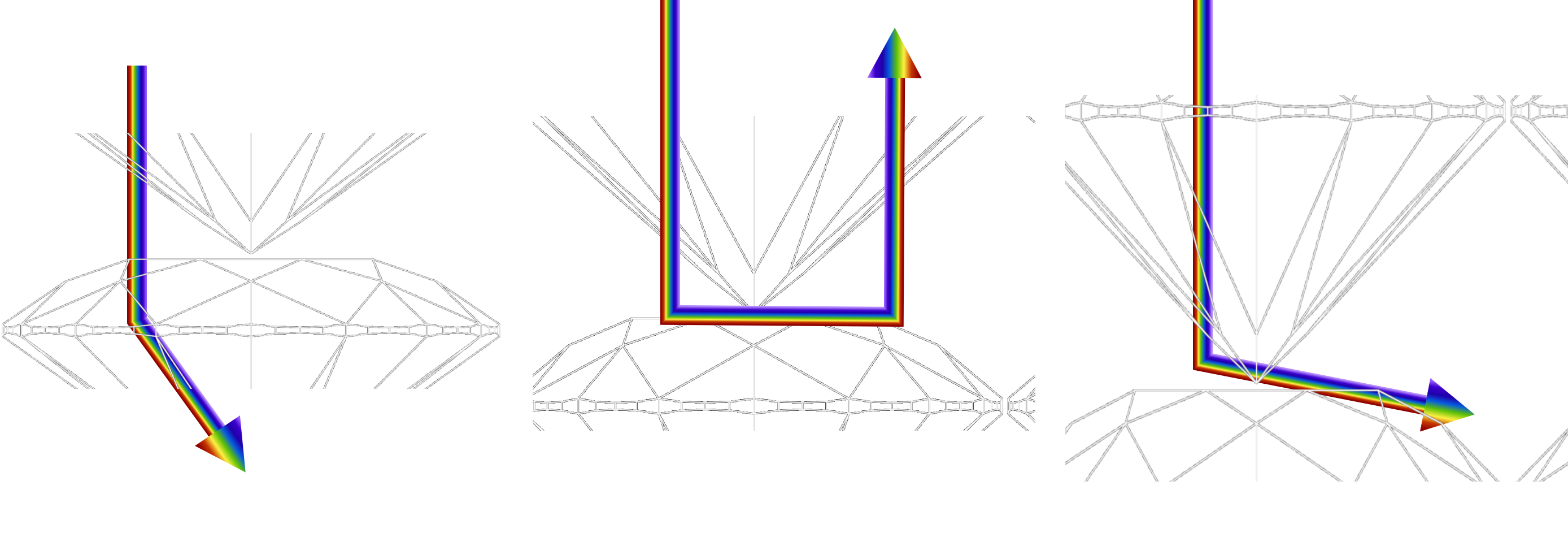
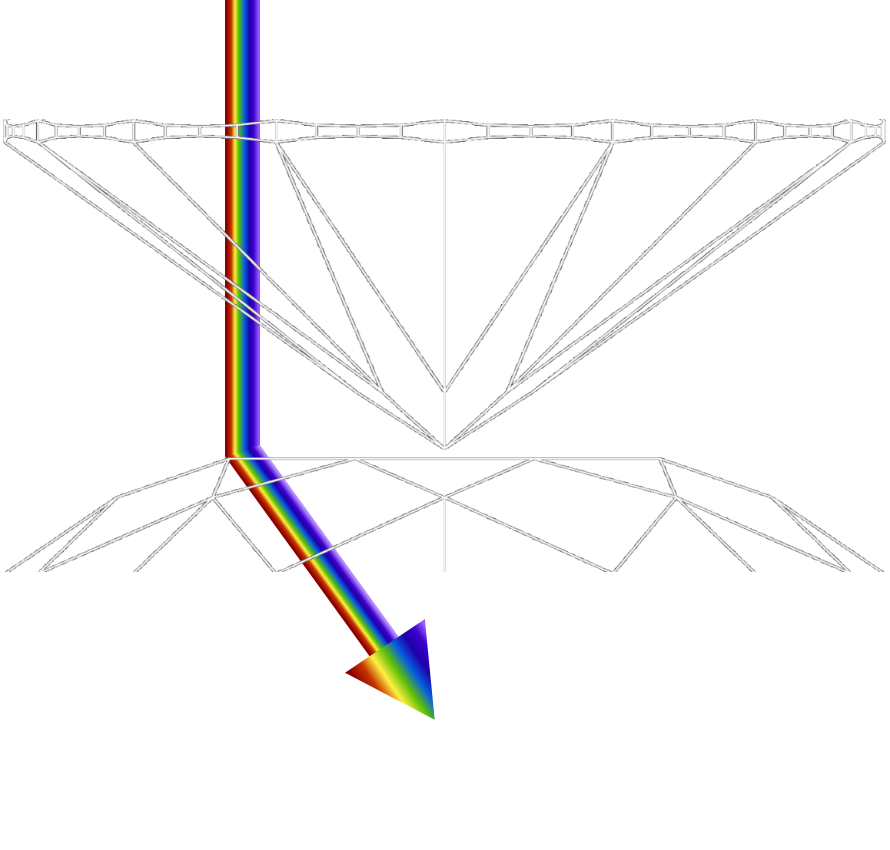
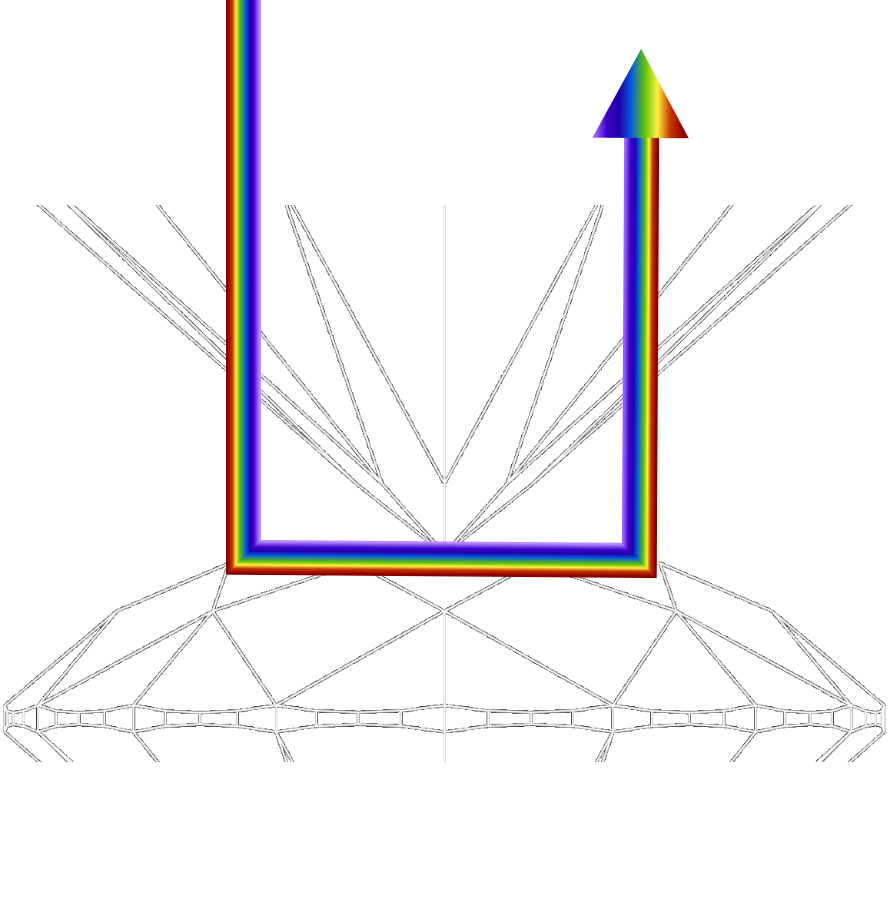
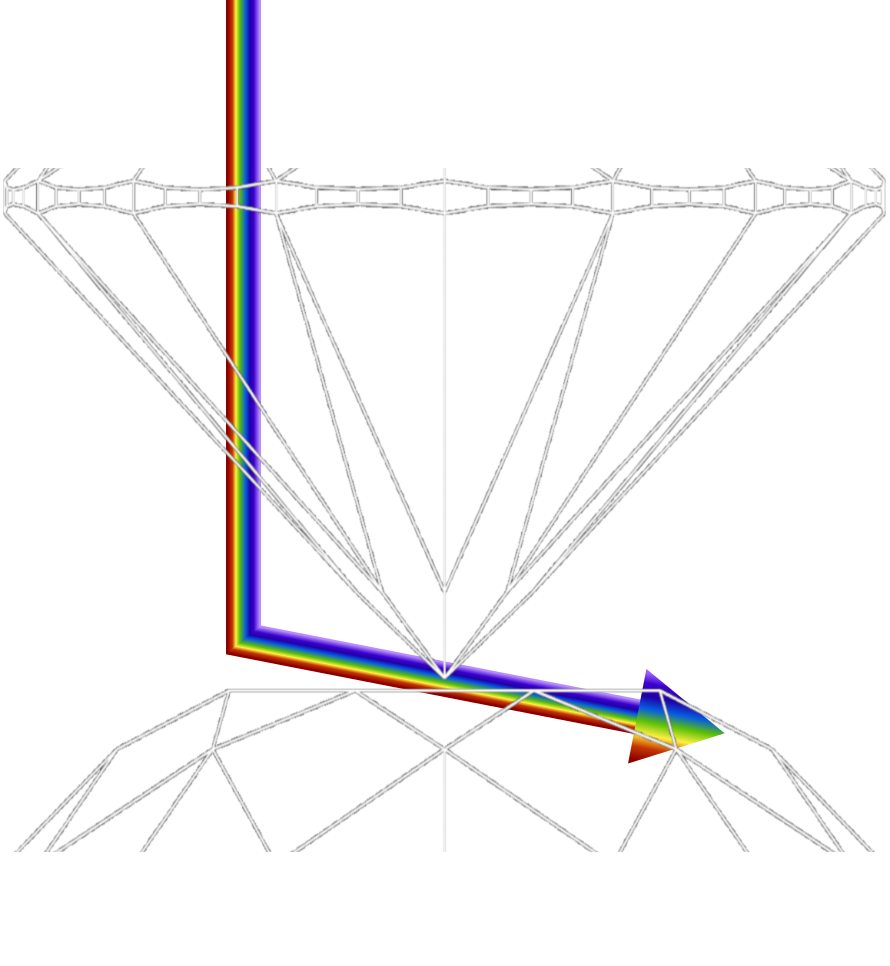
Cut is the single most important factor in a diamond's beauty. While carat, color, and clarity matter, a poorly cut diamond can look dull no matter how large or colorless it is. The cut dictates how light enters the diamond, reflects internally, and exits to the eye, producing brilliance, fire, and scintillation.
How a Diamond Sparkles
A diamond's “sparkle” is three effects working together.
- Brilliance
- The white light that reflects back out of the diamond. This is its brightness.
- Fire
- The flashes of rainbow color you see as light splits inside the stone.
- Scintillation
- The sparkle and flashing you see as the diamond moves in the light.
Brilliant cut is a faceting style built to maximize these effects, which is different from brilliance itself, the brightness described above.
Understanding Cut Grades
Cut is arguably the most important factor in a diamond's beauty, but how it's graded depends on who certified the stone. GIA, the industry standard, assigns cut grades only to round brilliants on a scale from Excellent to Poor. "Excellent" maximizes sparkle and symmetry, while "Very Good" is nearly indistinguishable to the naked eye at a lower price. Other labs go further: AGS evaluates light performance with its Ideal grade, and GCAL certifies the rarest precision cuts as 8X. Here's the full hierarchy:
Cut Grades Across Labs
| Quality | GIA | IGI | GCAL | AGS | HRD | EGL |
|---|---|---|---|---|---|---|
| Finest | – | Ideal | 8X | Ideal (0) | – | Ideal Plus |
| Excellent | Excellent | Excellent | Excellent | Excellent (1) | Excellent | Ideal |
| Very Good | Very Good | Very Good | Very Good | Very Good (2) | Very Good | Very Good |
| Good | Good | Good | Good | Good (3–4) | Good | Good |
| Fair | Fair | Fair | Fair | Fair (5–7) | Fair | Fair |
| Poor | Poor | – | Poor | Poor (8–10) | – | – |
Grade names vary by lab; the same word can reflect slightly different standards, and GIA is the most consistent benchmark.
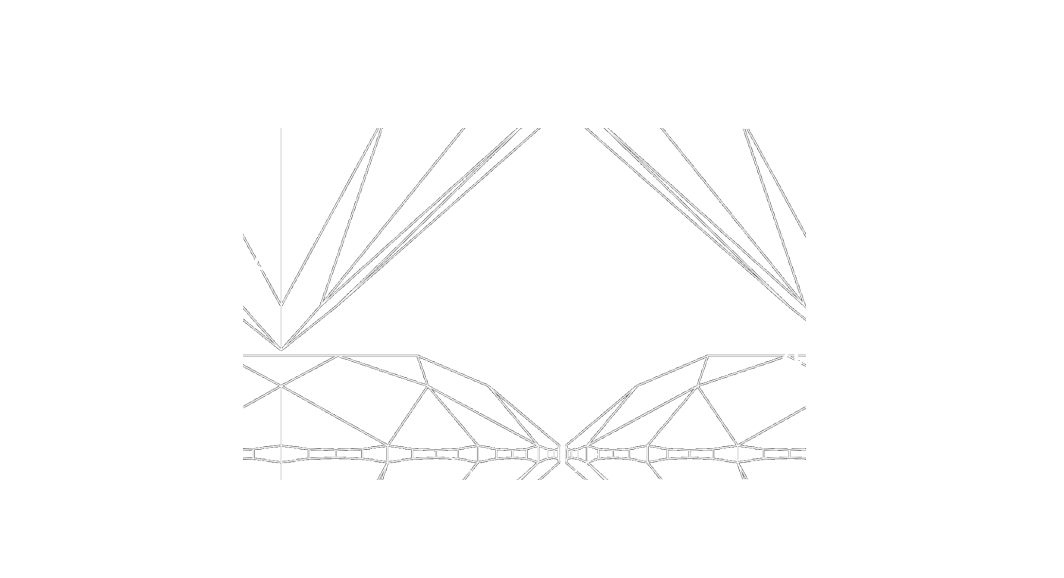
8X (GCAL)— The ultimate in precision cutting. A diamond must score Excellent in all eight criteria evaluated by GCAL: polish, external symmetry, proportions, optical brilliance, fire, scintillation, optical symmetry, and Hearts & Arrows. Less than 1% of Excellent-graded diamonds qualify. Available for Round, Oval, Princess, Marquise, Pear, and Radiant shapes.
Ideal (AGS)— The highest grade on the American Gem Society's 0–10 scale. Goes beyond GIA Excellent by evaluating light performance: how the diamond handles brilliance, fire, and contrast. AGS was acquired by GIA in 2022, and the AGS Ideal report is now available as a GIA supplemental assessment.
Excellent (GIA)— GIA's highest cut grade. The diamond maximizes sparkle and symmetry with optimal proportions, polish, and symmetry. Represents roughly the top 3% of cut quality.
Very Good (GIA) — Nearly indistinguishable from Excellent to the naked eye. Minor light leakage visible only under laboratory analysis. A standout choice when you want near-Excellent beauty for noticeably less.
Good (GIA)— Good light reflection with some visible loss. The diamond still sparkles but doesn't maximize its potential.
Fair (GIA) — Limited brilliance. Light leaks noticeably through the bottom and sides of the diamond.
Poor (GIA) — Most light escapes the diamond. It appears dull and lifeless regardless of color or clarity.
On JMorris Studio, our diamond filter uses the Fair–Excellent range. Diamonds graded Ideal or 8X are included when you select Excellent, as they exceed that standard.
How JMorris Studio Grades Fancy Shapes
GIA assigns official cut grades only to Round Brilliant diamonds. Fancy shapes (Oval, Princess, Emerald, Cushion, Asscher, Radiant, Marquise, and Pear) have too much variation in proportions and facet structures for a single standardized grading system.
To address this, JMorris Studio uses a scientific, proportion-based assessment built on established industry principles. Our algorithm evaluates each diamond's key measurements and assigns a cut quality grade on the same Excellent-to-Poor scale.
What we measure

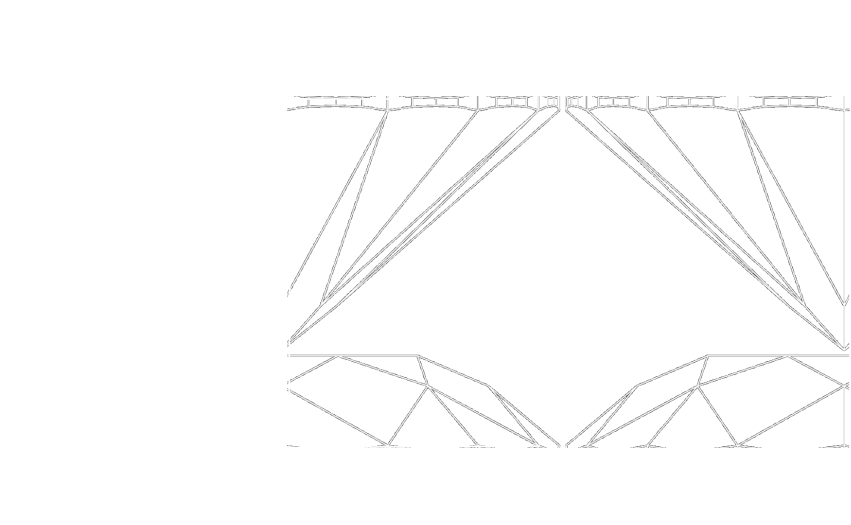
- Length-to-width ratio
- How elongated the shape is (length divided by width). A ratio near 1.00 looks square or round; higher numbers look longer and narrower.
- Table percentage
- The width of the flat top facet, called the table, relative to the whole diamond. It balances how bright versus how fiery the stone appears.
- Depth percentage
- How deep the diamond is from top to bottom, relative to its width. Too shallow and light leaks out the bottom; too deep and it escapes the sides. The right depth sends light back to your eye.
What we consider optimal in each shape

Oval
- Length-to-width ratio: 1.35-1.45
- Table percentage: 56-62%
- Depth percentage: 59-62%
- Bow-tie effect assessment

Princess
- Length-to-width ratio: 1.00-1.05
- Table percentage: 65-70%
- Depth percentage: 68-74%
- Corner protection considerations

Cushion
- Length-to-width ratio (square: 1.00-1.05, rectangular: 1.10-1.20)
- Table percentage: 60-64%
- Depth percentage: 65-69%
- Modified brilliant facet optimization

Emerald
- Length-to-width ratio: 1.40-1.50
- Table percentage: 61-69%
- Depth percentage: 61-67%
- Step-cut proportion balance

Asscher
- Length-to-width ratio: 1.00-1.03
- Table percentage: 62-68%
- Depth percentage: 60-66%
- Square symmetry precision

Radiant
- Length-to-width ratio (square: 1.00-1.05, rectangular: 1.15-1.25)
- Table percentage: 62-68%
- Depth percentage: 66-70%
- Facet arrangement optimization

Marquise
- Length-to-width ratio: 1.90-2.10
- Table percentage: 56-62%
- Depth percentage: 56-62%
- Bow-tie effect minimization

Pear
- Length-to-width ratio: 1.55-1.75
- Table percentage: 58-64%
- Depth percentage: 58-64%
- Point symmetry and bow-tie assessment
When a vendor provides a cut grade, we display it. When one isn't available, which is common for fancy shapes, our algorithm fills the gap so you can still filter and compare diamonds by cut quality.
Tip: Both Very Good and Excellent cuts are sparkle powerhouses. The distinction lives in lab reports. Very Good is where brilliance meets value.
Color
Diamond color is graded from D (completely colorless) to Z (noticeable warmth or yellow tint). Color influences a stone's overall brightness and how "white" it appears once set in jewelry.

Color Grading and Selection
For most buyers, the F–H range strikes the perfect balance. These diamonds appear virtually colorless to the naked eye, offering the crisp, bright look people love, without the premium cost of D–E stones. Subtle warmth only becomes noticeable in lower grades.


Tips: Most people can't spot color in the F-H range once it's set, face up. That's why these grades are the sweet spot, white to the eye, smarter on the wallet.
The metal matters too. Yellow gold masks a little warmth in the diamond, so you can drop a grade or two and still look bright. White metals can do the opposite. In platinum, the coolest white, diamond color shows the most, so lean whiter there.
Clarity
Clarity measures the number, size, and visibility of a diamond's internal inclusions and external blemishes, its unique "fingerprint." No two diamonds are exactly alike, and nearly all contain some natural imperfections. The key is whether these marks are noticeable to the naked eye.

The Clarity Scale
The diagram above runs from flawless down to included. Here is what each grade on that scale actually means:
| Grade | What it means |
|---|---|
| FL, IF | Flawless and Internally Flawless. No inclusions visible under 10x magnification (IF may have tiny surface blemishes). The rarest and most expensive. |
| VVS1, VVS2 | Very, very slightly included. Inclusions so small they are very difficult to see even under 10x magnification. |
| VS1, VS2 | Very slightly included. Minor inclusions that are hard to spot under 10x and invisible to the naked eye. |
| SI1, SI2 | Slightly included. Inclusions are easy to see under 10x and are sometimes visible to the naked eye. |
| I1, I2, I3 | Included.Inclusions are visible to the naked eye and can affect the diamond's sparkle and durability. |
Clarity Grading and Selection
For most buyers, the sweet spot is VS2 or SI1. VS2 diamonds are very slightly included, with inclusions so small they're difficult to detect without magnification. SI1 diamonds often appear clean to the eye while offering a more budget-friendly option.
Clarity also interacts with shape and cut. Step cuts, like emerald or Asscher, use long, parallel facets that run like stairs; their large, open surfaces reveal inclusions more easily. Brilliant cuts, like round or oval, use many small facets for sparkle, which helps hide small imperfections.
Tip: VS2 and SI1 diamonds typically look clean to the eye, delivering beauty at a smart price point. Higher grades are a luxury choice for those who want perfection.
Certificate
A diamond certificate, also called a grading report, is the official documentation of a diamond's quality. It details every critical characteristic, carat weight, cut, color, clarity, measurements, proportions, and sometimes additional information like fluorescence or symmetry.

Tip: Verify the report yourself: enter its number on the issuing lab's website to confirm the grades match the stone you're buying.

Round diamonds carry a price premium (10–30% more than fancy shapes) because they're in high demand and waste more rough. Want bigger look for less? Go fancy shape and stand out.
Round

The round brilliant cut is engineered with 57–58 facets, mathematically optimized to reflect light. No shape outperforms it for brilliance and fire. The round is the only shape that GIA assigns an official cut grade to, making it easier for buyers to compare quality. Roughly 70% of all diamonds sold are round. It's the classic, timeless choice that never goes out of style. Because demand is strongest, round diamonds typically hold value better than fancy shapes.
Round diamonds sparkle like no other, but that brilliance comes at a price. Expect to pay 10–30% more than fancy shapes. If you want the most iconic, timeless look (and the strongest resale value), go round. If you want better value per carat and a more distinctive style, consider fancy shapes.
Oval

Created in the 1960s, the oval brilliant was designed to give buyers the sparkle of a round with a more elongated, elegant silhouette. Like the round, it typically has 57–58 facets, offering excellent brilliance and fire. Its stretched shape creates the illusion of greater size, making it a favorite for those wanting maximum finger coverage without paying round premiums.
The oval's biggest quirk is the "bow-tie effect," a shadow across the center caused by light leakage. Well-cut stones minimize it, but every oval has some degree of bow-tie. Ovals are also flattering on the hand, elongating fingers and appearing larger for their carat weight.
Oval diamonds are a smart choice if you want brilliance close to a round, but with more style and value. You'll often pay less per carat compared to round, while getting a stone that looks bigger. Just be selective with cut to avoid an overly dark bow-tie.


A bowtie is the shape across an oval's center. Depending on the cut, it can sparkle bright or darken into a shadow. Pear and marquise cuts show it too, as can elongated cushions.
Cushion

The cushion cut traces its roots back over 200 years, making it one of the most historic diamond shapes. Once known as the "old mine cut," it has evolved into today's cushion brilliant, with 58 facets that blend vintage charm with modern sparkle. Its softened square or rectangular outline, paired with rounded corners, gives it a romantic, timeless appeal.
Cushion cuts can vary in look. Some are squarer and chunkier with larger facets (great for fire), while others are elongated and more brilliant (closer to a round in sparkle). This versatility is part of their charm, but it also means shoppers should compare different cushion styles to see what fits their taste.
For buyers, cushion cuts often represent strong value. They typically cost less per carat than round diamonds and can hide inclusions well due to their facet pattern. The trade-off is that cushions face up slightly smaller than some other shapes because more of the weight sits in the depth.
Cushion diamonds are perfect if you love a blend of vintage and modern. They offer softness, character, and excellent value, making them one of today's most popular fancy shapes for engagement rings.


Cushion and radiant cuts come in both square and rectangular versions under the same name. The emerald's square version, though, has its own name: the asscher.
Princess

Introduced in the 1970s, the princess cut quickly became the most popular square-shaped diamond. With its sharp corners and modern geometry, it offers a contemporary alternative to round while still delivering exceptional brilliance. Typically cut with 57–76 facets, the princess is engineered to maximize sparkle in a square silhouette.
One of its biggest advantages is efficiency: princess cuts use more of the rough diamond crystal, which means less waste compared to rounds. That efficiency often translates into better value per carat. The crisp, clean lines also help hide inclusions, making them more forgiving in lower clarity grades.
Buyers should take care with settings, since the pointed corners of a princess cut are more prone to chipping. A protective setting, such as prongs at each corner or a bezel, keeps the diamond secure for daily wear.
Princess cuts are ideal for those who want modern style, bold geometry, and dazzling brilliance at a more approachable price point than round. They strike the perfect balance between contemporary fashion and enduring sparkle.
Emerald

The emerald cut is one of the oldest diamond shapes, dating back to the 1500s when stonecutters refined emeralds with long, step-like facets to prevent breakage, hence the name. Its elegant rectangular shape, cropped corners, and hall-of-mirrors effect, where rows of parallel facets reflect back and forth like facing mirrors, give it a refined, sophisticated look unlike any other cut.
Unlike brilliant cuts, which are designed for sparkle, the emerald cut emphasizes clarity and luster. Its broad, open table and step facets create flashes of light rather than fiery scintillation, showcasing a diamond's transparency and natural beauty. This means higher clarity grades are often preferred, since inclusions are easier to spot.
Emerald cuts also create the illusion of elongation, making fingers appear slimmer and longer. They usually face up larger than cushions or princess cuts of the same carat weight, giving strong presence for the price.
The emerald cut is perfect for buyers who value understated elegance, clean lines, and vintage-inspired glamour. It's less about sparkle and more about sophistication, a choice that feels quietly confident and timeless.
Marquise

The marquise cut has royal roots. It was first commissioned in 18th-century France by King Louis XV, said to be inspired by the shape of his mistress's smile. Its elongated, tapered form with pointed ends gives it a distinctive, regal flair. With 56–58 facets, the marquise can offer brilliance comparable to a round, but in a far more dramatic outline.
One of its biggest advantages is the illusion of size. Because of its length, a marquise often looks larger than other shapes of the same carat weight, giving maximum finger coverage. Like the oval, it also flatters the hand by making fingers appear longer and slimmer.
Buyers should watch for the "bow-tie effect," a dark shadow across the center, which varies depending on cut quality. Settings also matter. Protective prongs on the pointed ends help prevent chipping.
The marquise is a bold, distinctive choice for those who want maximum presence, vintage romance, and a diamond that stands out from the crowd.
Pear

The pear cut, also called the teardrop, blends the brilliance of a round with the elegance of a marquise. With one rounded end and one pointed tip, it creates a graceful, elongated silhouette that feels both romantic and distinctive. Its 56–58 facets deliver lively sparkle while its shape naturally draws the eye.
Pear diamonds are known for looking larger than their carat weight suggests, thanks to their elongated form. They also slim and lengthen the appearance of fingers, much like ovals and marquises. Orientation matters: the point can be worn up or down, offering two different looks in the same ring. Or choose a more avante-garde approach and set the pear shape east to west.
Like other elongated shapes, pears often show a "bow-tie effect," and the quality of the cut determines whether it enhances or detracts from the stone's beauty. Protective prongs are key for securing the delicate tip.
For buyers, the pear offers a romantic twist on tradition: brilliance with a touch of individuality. It's perfect if you want a diamond that feels unique, expressive, and full of personality.
Asscher

The Asscher cut was created in 1902 by the Asscher Brothers of Amsterdam, blending the elegance of the emerald cut with a square shape and dramatic step facets. Its cropped corners and concentric, layered facets create a mesmerizing "hall of mirrors" effect, offering subtle sparkle and deep clarity.
Asscher cuts emphasize clarity and quality over fire, so higher-clarity diamonds are recommended. Their geometric, vintage-inspired look gives them an art deco appeal, perfect for those who appreciate classic design with a modern edge.
Buyers should note that Asschers often appear smaller face-up than most other shapes of similar carat weight, so the length-to-width ratio matters for visual balance. Their cropped corners are structural as well as stylish: unlike a sharp-cornered square such as a princess cut, an Asscher has no exposed points, so it holds up well to everyday wear without corner-protective prongs.
Asscher diamonds are ideal for lovers of symmetry, timeless elegance, and distinctive vintage style. They make a statement without being flashy, a refined choice for discerning tastes.
Radiant

The radiant cut was developed in the late 1970s as a hybrid between the emerald and round brilliant cuts. Its cropped corners and 70+ facets combine the elegance of a step cut with the brilliance of a round, resulting in a fiery, versatile diamond shape.
Radiants are particularly good at hiding inclusions, thanks to their intricate facet pattern, making them a strong choice for slightly lower clarity grades without sacrificing sparkle. The square or rectangular outline gives a modern, bold appearance, while the brilliance ensures maximum life and fire in the stone.
Buyers should consider proportions carefully. Too shallow or too deep can affect the diamond's face-up size and sparkle. Protective settings for the corners are recommended to prevent chipping, especially in rings worn daily.
The radiant cut is perfect for those who want bold brilliance with a contemporary edge. It's a versatile, statement-making choice that blends sparkle, durability, and style.
Precious Metals
The metal sets the tone of a piece: its color, its feel, and how it wears over the years. The classic choices for fine jewelry are silver, gold, and platinum, each with its own look and character. Here's how they compare, and what to know before you choose.


Understanding Gold Alloys
Pure gold (24K) is too soft for jewelry. It's mixed with other metals for strength, durability, and color. The alloy blend determines both the color and the character of the metal.
Yellow Gold
| Ratio | 10/24 | 14/24 | 18/24 | 22/24 |
|---|---|---|---|---|
| Purity | 41.7% | 58.5% | 75% | 91.7% |
| Color | Light | Warm | Deep | Vivid |
| Scratch resistance | Hardest | Hard | Soft | Softest |
| Tarnish resistance | Low | Good | Better | Best |
| Best for | Active wear | Everyday | Premium | Special occasions |


The classic. Higher karat means more gold: richer, deeper color, but a softer metal. For daily wear, 14K is the balance most people choose.
White Gold
| 10K | 14K | 14K X1 | 18K | 18K Pd | |
|---|---|---|---|---|---|
| Gold purity | 41.7% | 58.5% | 58.5% | 75% | 75% |
| Tone | Warm champagne | Warm champagne | Bright white | Warm champagne | Soft white |
| Contains nickel | Yes | Yes | Yes | Yes | No |
| Plating | Usually rhodium | Usually rhodium | Not needed | Usually rhodium | Not needed |
| Best for | Active wear | Everyday | Bright white | Richer feel | Premium |
White gold is gold alloyed to a white tone; the karat and alloy set how white it looks and how much upkeep it needs. 10K is the hardest and most affordable, 14K the everyday standard, 14K X1 a brighter white with no maintenance, and 18K palladium a naturally white, plating-free option.
Rose Gold
| 10K | 14K | 18K | |
|---|---|---|---|
| Gold purity | 41.7% | 58.5% | 75% |
| Copper | Most | Medium | Least |
| Tone | Pinkest | Classic rose | Subtle blush |
| Best for | Bold color | Everyday | Premium, subtle |
Rose gold gets its blush from copper: more copper (a lower karat) means a stronger pink, less means a subtle rose. 14K is the classic, most popular choice.
Comparing White Metals
White is the most diverse color family in precious metals, spanning warm champagne to cool white to soft grey. Your choice isn't just about color, it's also about how the metal ages with your design. Intricate details hold their shape longest in platinum, while gold mellows to a soft, worn-in luster.
Our take on white gold
It's common in the jewelry industry to plate white gold with rhodium for a brighter white. Rhodium is a coating: it wears over a year or two and needs re-dipping to keep its look. We do things a little differently. We describe every metal in its natural state so you can choose one you'll love as it truly looks and ages.
Prefer the plated finish? We're happy to do it on request.
Sensitive skin
Nickel is one of the most common skin sensitivities and it is commonly used to alloy white gold. Platinum, palladium and 18K palladium white gold are all made without it. Not sure which is right for you? We're happy to help you choose.
| 10K · 14K · 18K White | 14K X1 | 18K Pd | Platinum | Palladium | Sterling | |
|---|---|---|---|---|---|---|
| Purity | 41.7 / 58.5 / 75% gold | 58.5% gold | 75% gold | 95% platinum | 95% palladium | 92.5% silver |
| Tone | Warm champagne | Bright white | Soft white | Cool white | Soft grey | Pink-white |
| Density (g/cm³) | 11.0 / 12.6 / 14.7 | 12.58 | 15.66 | 20.8 | 12.02 | 10.36 |
| Contains nickel | Yes | Yes | No | No | No | No |
| Plating | Rhodium optional | None | None | None | None | None |
| Over time | Plating wears if applicable; replate | Stays white; scratches | Stays white; softer, scratches | Satin patina; repolish | Grey patina; repolish | Tarnishes; needs polishing |
| Best for | Everyday | Affordable white | Premium white | Heirloom detail | Platinum, lighter | Fashion |

10K · 14K · 18K White Gold
The classic white gold, in three karats. All read a warm champagne on their own, and rhodium plating is there whenever you want a brighter white.

14K X1
A bright white that stays white with no plating.

18K Palladium White Gold
The premium white gold: 18K richness, naturally white, made without nickel, and it never needs plating.

Platinum
Our most durable choice. Scratches displace rather than wear away, so milgrain and engraving stay crisp for generations. It ages to a soft satin finish.

Palladium
The platinum look and family, far lighter on the finger and easier on the budget.

Sterling Silver
Brilliant white at the most accessible price, but soft and quick to tarnish. Best for fashion and occasional wear.
Ring Size Guide
Finding the perfect ring size is essential for comfort and security. A properly fitted ring should slide on easily but require a little resistance when removing it over your knuckle.
Method 1: Use an Existing Ring
Find a ring that fits your desired finger well. Measure the inside diameter in millimeters and use the ring size chart below to find your corresponding US size.


Tips for Measuring Your Ring Size
- Measure the precise finger (and hand) for your ring. Fingers on your dominant hand are usually slightly larger, and every finger is different.
- Fingers swell slightly during the day and in warm weather, and shrink in the morning or cold. Measure late in the day to help ensure your ring fits comfortably.
- If your knuckle is wider than the base of your finger, the ring must slide over it but sit snug at the base. Measure both spots and choose a size in between.
- Wider bands (5mm+) feel tighter than thin rings of the same size. For comfort, go up half a size with any wide or chunky style.
- Double-check your measurement. Measure 2–3 times on different days. Avoid cold hands, post-workout, or after salty meals when fingers swell temporarily.
Not quite sure about your size? No worries at all, we'll send you a free ring sizer (shipped to you at no cost) so your ring fits perfectly from the very first moment you slip it on. And for extra peace of mind, we offer one complimentary resizing within the first year if it's not absolutely perfect.
| Diameter Millimeters | 14.03 | 14.45 | 14.86 | 15.72 | 15.69 | 16.09 | 16.51 | 16.92 | 17.33 | 17.75 | 18.16 | 18.57 | 18.98 | 19.4 | 19.81 | 20.22 | 20.63 | 21.05 | 21.46 |
|---|---|---|---|---|---|---|---|---|---|---|---|---|---|---|---|---|---|---|---|
| Circumference Millimeters | 44.2 | 45.5 | 46.8 | 48 | 49.3 | 50.6 | 51.9 | 53.1 | 54.4 | 55.7 | 57 | 58.3 | 59.5 | 60.8 | 62.1 | 63.4 | 64.6 | 65.9 | 67.2 |
| US, Canada, Mexico Ring Size | 3 | 3.5 | 4 | 4.5 | 5 | 5.5 | 6 | 6.5 | 7 | 7.5 | 8 | 8.5 | 9 | 9.5 | 10 | 10.5 | 11 | 11.5 | 12 |
| Diameter Millimeters | Circumference Millimeters | US, Canada, Mexico Ring Size |
|---|---|---|
| 14.03 | 44.2 | 3 |
| 14.45 | 45.5 | 3.5 |
| 14.86 | 46.8 | 4 |
| 15.72 | 48 | 4.5 |
| 15.69 | 49.3 | 5 |
| 16.09 | 50.6 | 5.5 |
| 16.51 | 51.9 | 6 |
| 16.92 | 53.1 | 6.5 |
| 17.33 | 54.4 | 7 |
| 17.75 | 55.7 | 7.5 |
| 18.16 | 57 | 8 |
| 18.57 | 58.3 | 8.5 |
| 18.98 | 59.5 | 9 |
| 19.4 | 60.8 | 9.5 |
| 19.81 | 62.1 | 10 |
| 20.22 | 63.4 | 10.5 |
| 20.63 | 64.6 | 11 |
| 21.05 | 65.9 | 11.5 |
| 21.46 | 67.2 | 12 |
Ring & Band Terminology
Understanding ring terminology helps you make informed decisions when customizing your band. From profile shape to fit style, each element affects how your ring looks and feels on your finger.
Head style
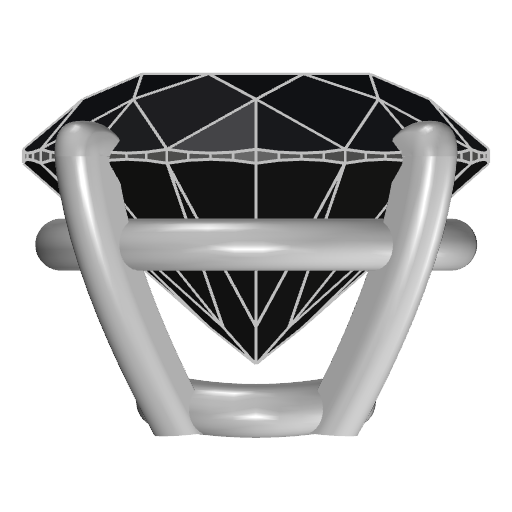
basket
A gemstone setting where a framework of metal supports the gemstone beneath the girdle, typically using multiple prongs to secure the stone. The open structure resembles a basket and allows light to enter the gemstone from the sides and bottom.
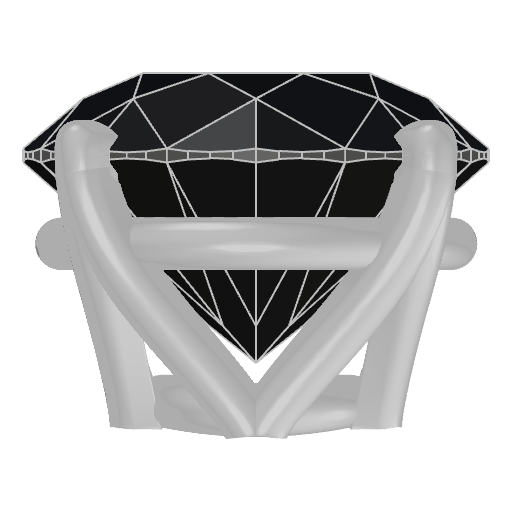
petal
A gemstone setting with prongs or metal elements shaped like petals around the base of the gemstone. The petal-shaped design creates a softer, decorative floral appearance.
Shank Contour
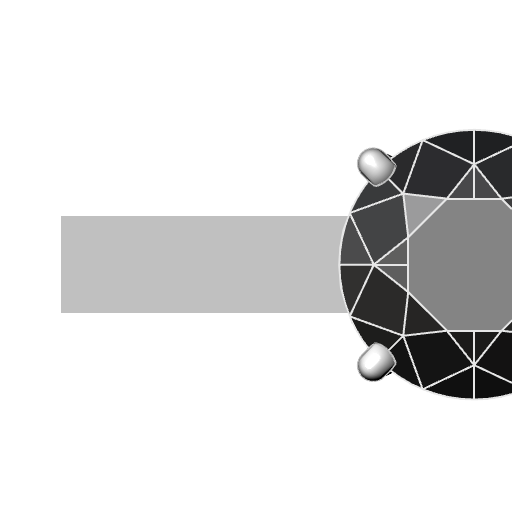
straight
A shank contour where the sides remain parallel, maintaining the same width around the entire band or shank.
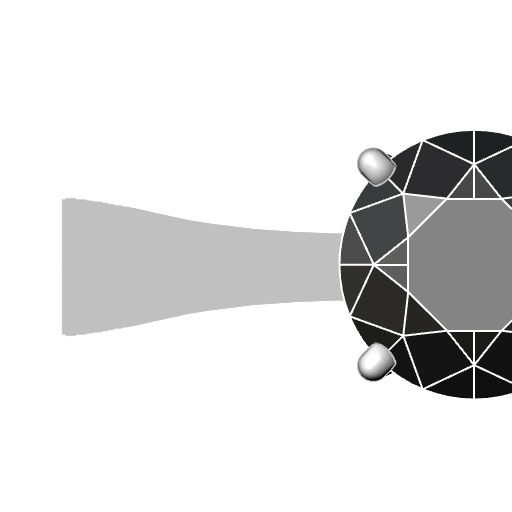
reverse taper
A shank contour that gradually becomes narrower as it approaches the top of the ring.
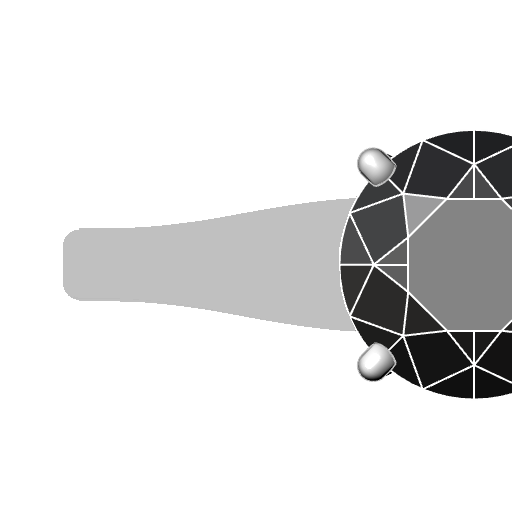
flare
A shank contour that is wider at the top of the ring, narrows quickly, and then maintains a consistent width around the sides and bottom of the shank.
Accent Setting Type
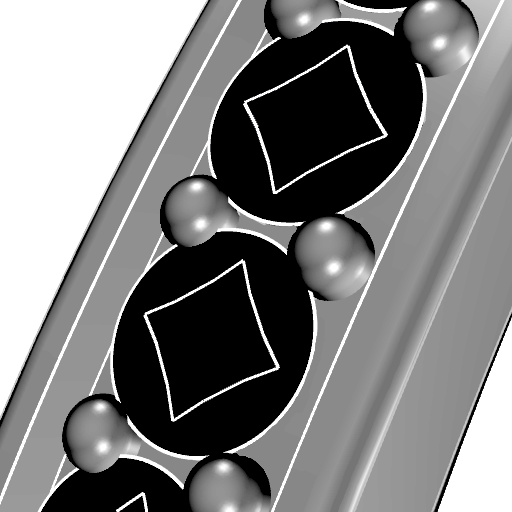
bead set
A gemstone setting technique where small beads of metal are raised around each gemstone to hold it securely in place. Bead setting allows gemstones to be set closely together with minimal visible metal, creating a continuous surface of sparkle. The graver used to form and shape the beads also creates small, polished cuts in the metal that catch and reflect light, adding extra brilliance to the setting.
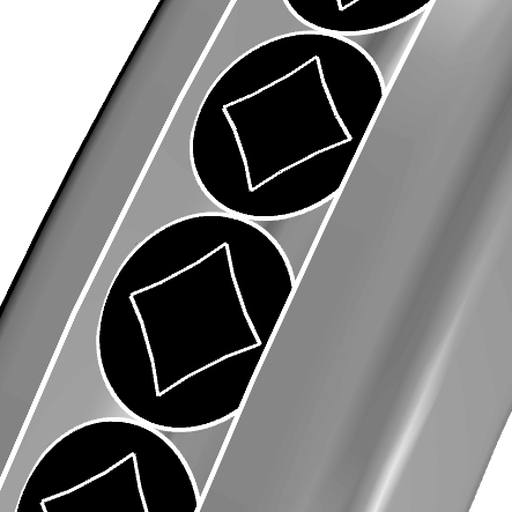
channel set
A gemstone setting technique where gemstones are secured between two parallel walls of metal, creating a continuous row of stones with no visible prongs between them. Channel setting gives the surface a clean, streamlined appearance while protecting the edges of the gemstones within the surrounding metal.
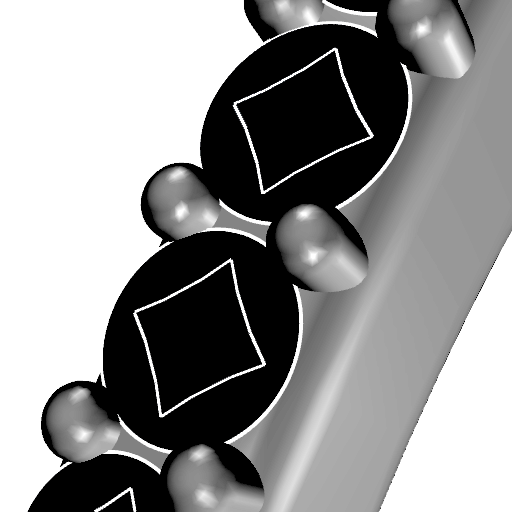
surface prong
A gemstone setting technique where gemstones are secured to the surface of the metal with small, individual prongs that are added to the setting. Unlike channel or bead settings, there are no metal rails surrounding the stones, displaying more gemstone than metal. This technique is well suited to dainty designs and thinner bands.
Gallery
The area of a ring beneath the center gemstone that connects and supports the setting. The gallery can add structural support while also providing an opportunity for decorative details or additional gemstones.
open
A gallery design where the area beneath the center gemstone is left open rather than enclosed by metal, creating a lighter and more open appearance.
Band Terms
Profile
The profile shape is the ring band's cross-section, seen from the side. The profile affects the ring's silhouette when worn.Fit
Comfort Fit bands have a gently rounded interior, while Standard Fit bands have a flat interior for a traditional feel.Weight
Ring weight describes the thickness of the profile and determines how much metal is used in the band, ranging from ultralight to heavy profiles.Width
As a guideline, many shoppers choose 2–4 mm for a slimmer look and 6–8 mm for a wider band.Design Elements
Design elements refer to decorative details, often along the edges of the band, such as milgrain, rope, or beaded finishes.That's everything, from carat to karat. Thanks for learning with us. Now go Maximize Brilliance™.